
Several factors can cause the compressed air pressure at the point of use to fail to meet requirements - in other words, the available pressure is lower than expected - such as:
Excessive pressure drop in the system:
- Failure to replace pipeline filters regularly
- Poor piping system design (insufficient pipe diameter)
- Lack of an air dryer, leading to pipe corrosion over time, reduced effective cross-section, and increased pressure loss
Insufficient compressor capacity to meet current demand:
- Increased air demand due to the addition of air-consuming equipment
- Increased air leakage within the system
- Reduced compressor efficiency caused by lack of maintenance or improper maintenance (e.g., use of low-quality spare parts or lubricating oil)
As a result, compressed-air-driven production equipment may operate improperly or experience malfunctions.
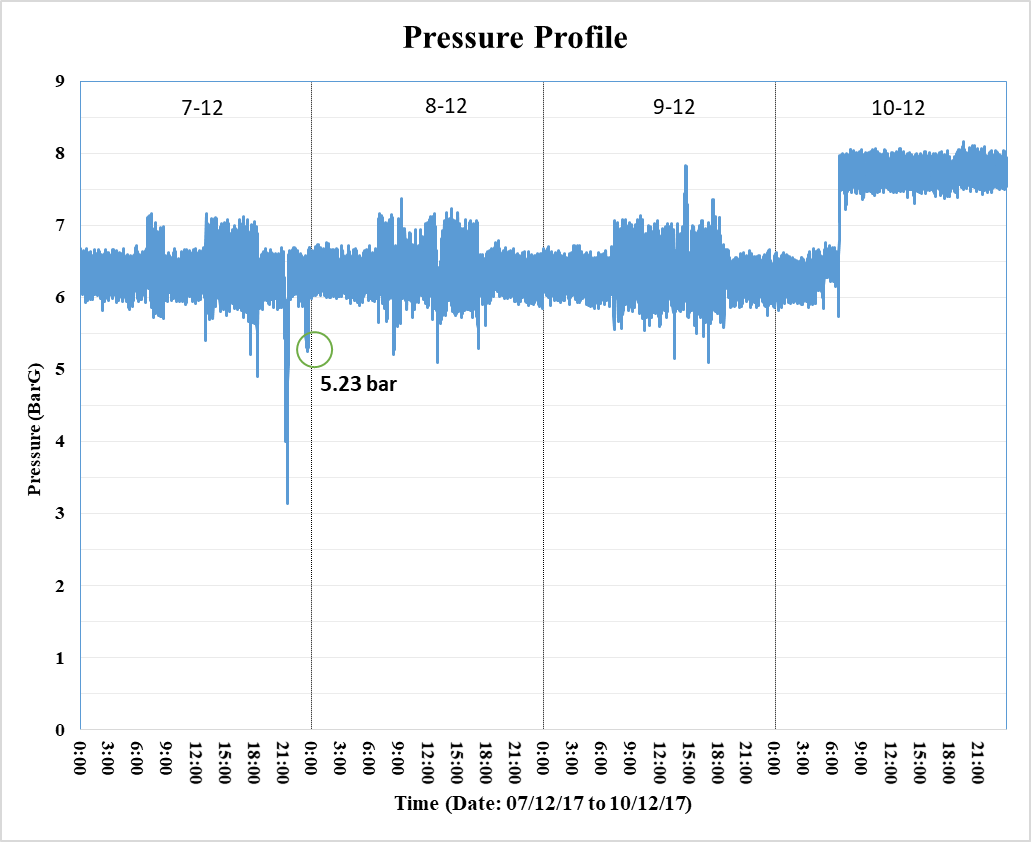
To determine how much compressed air is actually missing, manual estimation is often inaccurate and time-consuming. Instead, a practical and reliable approach is to calculate the required additional air flow based on real operating conditions.
The calculator below allows you to quantify the air flow deficit by comparing the lowest actual system pressure with the target operating pressure, together with the current total air supply capacity. This provides a clear, data-based result showing how much additional air flow (m³/min) is required to restore stable pressure at the point of use.
By using this tool, you can quickly evaluate whether the pressure issue is caused by insufficient compressor capacity, and make informed decisions on adding a compressor, upgrading the system, or addressing pressure losses—without guesswork or oversizing.
Calculate Required Additional Air Flow When Pressure Drops
This tool estimates the additional compressed air flow required (m³/min) when system pressure drops due to increased air demand.