/ BLOG
MỤC LỤC BÀI VIẾT
- What Is Dew Point?
- Dew Point in Compressed Air
- Guide to Determining the Required Dew Point for a Compressed Air System
- How to Achieve the Required Compressed Air Dew Point
- How to Determine the Current Dew Point of Compressed Air
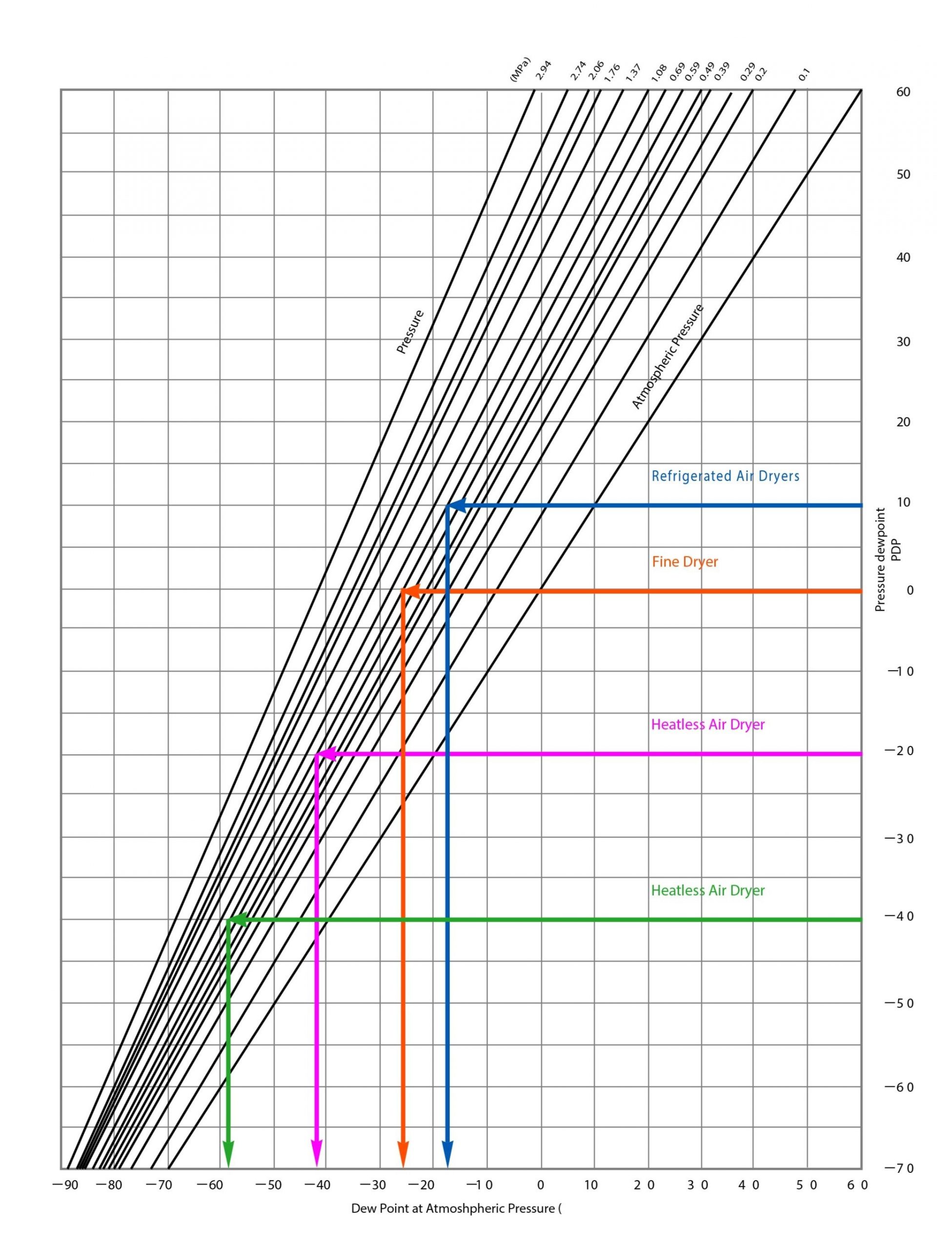
- Conversion Table Between Pressure Dew Point (PDP) and Atmospheric Dew Point (ADP)
What Is Dew Point?
The most common parameter used to determine the water content in air is the dew point.
Dew point is the temperature at which air becomes saturated with water vapor and condensation begins to form. In simple terms, it is the temperature at which “dew” appears. Dew point is always expressed as a temperature value.
Example: If an air stream has a dew point of 10°C, water vapor will only begin to condense into liquid when the air temperature drops below 10°C.

Practical Example: When a cold beverage can is placed in ambient air, water droplets often form on the outside of the can. This happens because the dew point of the surrounding air is relatively high (for example, 28°C).
When the can temperature is around 15°C, which is below the ambient dew point, moisture in the air condenses and forms water droplets on the can surface.
The Lower the Dew Point, the Drier the Air
A lower dew point indicates drier air, meaning less water vapor is present.
Dew Point in Compressed Air
The same principle applies to compressed air systems.
The dew point of compressed air is the temperature at which water vapor in the compressed air begins to condense into liquid water.
Example
If compressed air has a dew point of 5°C, liquid water will only appear when the compressed air temperature drops to 5°C or lower.
Pressure Dew Point (PDP)
The Pressure Dew Point (PDP) is the dew point of compressed air measured at a specific operating pressure. PDP is the key indicator used to evaluate the dryness of compressed air after it passes through an air dryer.
PDP vs. ADP – Important Distinction
It is important to clearly distinguish between:
- Pressure Dew Point (PDP): Dew point measured at the actual compressed air pressure
- Atmospheric Dew Point (ADP): Dew point referenced to atmospheric pressure (1 bar)
These two values are not interchangeable and must be specified correctly when evaluating compressed air quality or compliance with standards such as ISO 8573-1.
Guide to Determining the Required Dew Point for a Compressed Air System
To select the appropriate dew point for a compressed air system, the following factors should be carefully evaluated:
1. Production Equipment and Process Requirements
Determine the dew point requirements specified by production equipment, if available, or any special dryness requirements where compressed air may come into contact with products. Certain applications require extremely dry air to prevent quality issues or contamination.
2. Lowest Ambient Temperature at the Plant Location
Identify the lowest ambient temperature that can occur at your plant location during the year.
For example, in Northern Vietnam, winter temperatures can fall below 10°C. In such cases, the selected compressed air dew point must be lower than 10°C to prevent condensation within the system.
3. Lowest Temperature Along the Compressed Air Piping Route
Determine the lowest environmental temperature along the compressed air piping route.
For example, if compressed air pipes pass through cold rooms, air-conditioned spaces, or run directly beneath air-conditioning outlets, the dew point must be selected to remain below these local temperature conditions to avoid moisture condensation.
Important Note
The dew point temperature of compressed air must always be lower than the ambient temperature along the entire compressed air piping route. Otherwise, moisture will condense and form liquid water inside the system.
How to Achieve the Required Compressed Air Dew Point
Depending on the required Pressure Dew Point (PDP), different air drying technologies should be selected:
- PDP higher than +3°C: Use a refrigerated air dryer.
- PDP lower than +3°C: Use a membrane air dryer or a desiccant (adsorption) air dryer, depending on the required dew point level and application.
Sản Phẩm Nổi Bật
Máy đo điểm sương di động với bộ ghi dữ liệu tích hợp
How to Determine the Current Dew Point of Compressed Air
To accurately determine the dew point temperature of your compressed air system, a dew point meter is required.
Knowing the actual dew point of compressed air allows you to assess the air quality and evaluate the performance of your existing air dryer. Based on this information, appropriate corrective actions can be taken in a timely manner to prevent moisture condensation and water formation in the compressed air system.
Conversion Table Between Pressure Dew Point (PDP) and Atmospheric Dew Point (ADP)